QUANTAI ENERGY • SOLAR EPC / SCADA / O&M

Solar power plants from 100 kW
for businesses in Kazakhstan

We design and build solar power plants from 100 kW on business rooftops and available land. We size each system around electricity demand, generation potential and connection conditions.

Rooftop solarSolution schematic
Consumption assessmentSize the plant for your site
Engineering and constructionManage the project through commissioning
Monitoring and serviceTrack solar plant operation
01 / SOLUTIONS

A solar power plant
built around your business needs

We analyse electricity consumption, grid connection conditions and your site. We select the plant’s capacity and location: on the roof, on the ground or over a car park.

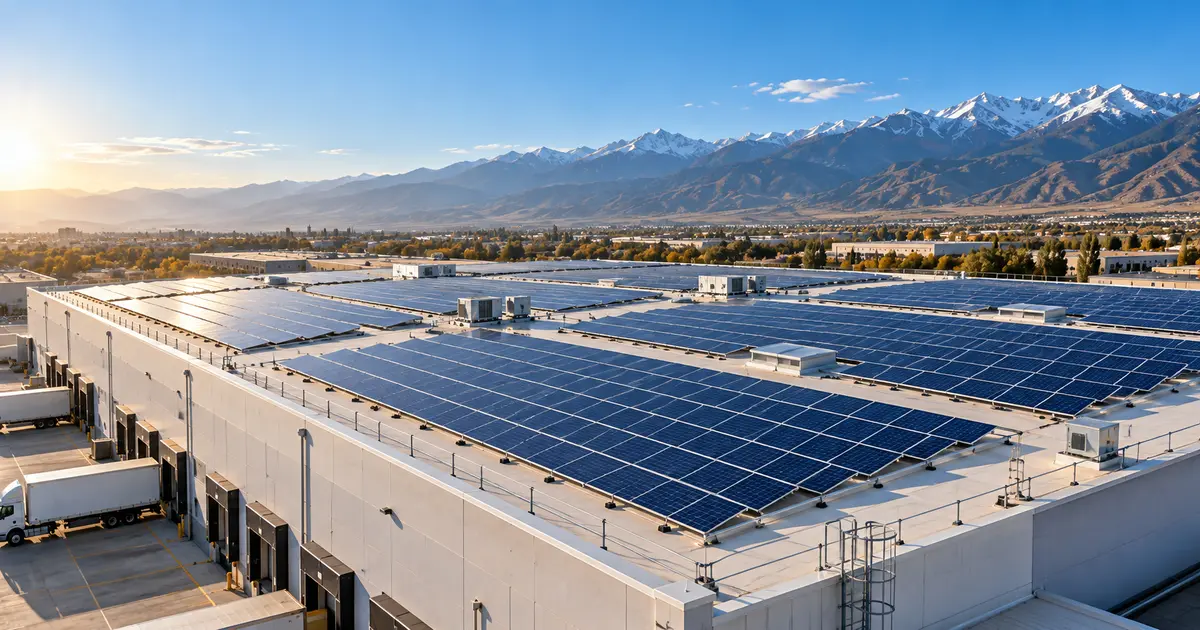
Solar modules on the roof of an industrial warehouse
Concept visual
Solution 01

Rooftop solar

For factories, warehouses, retail and office buildings with daytime electricity demand.

  • No additional land needed
  • Efficient installation
  • Integration with the existing connection
Explore rooftop solar
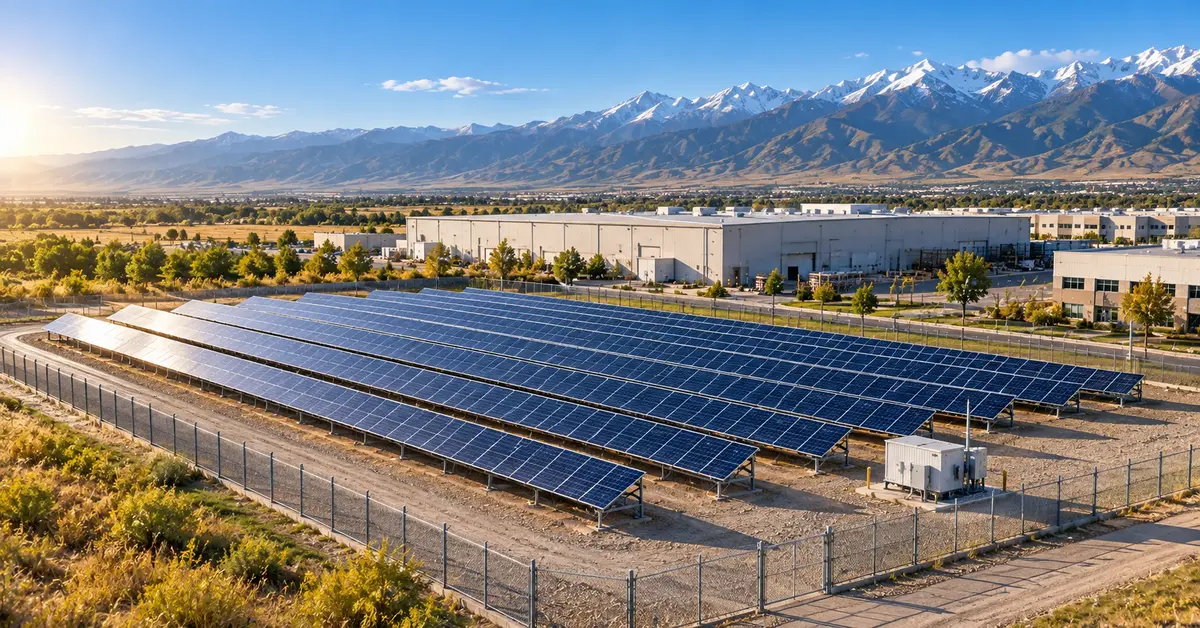
Rows of ground-mounted solar panels beside an industrial site
Concept visual
Solution 02

Ground-mounted solar

For businesses with available land and demand for larger capacity.

  • Optimised module orientation
  • Easy maintenance access
  • Phased expansion
Explore ground-mounted solar
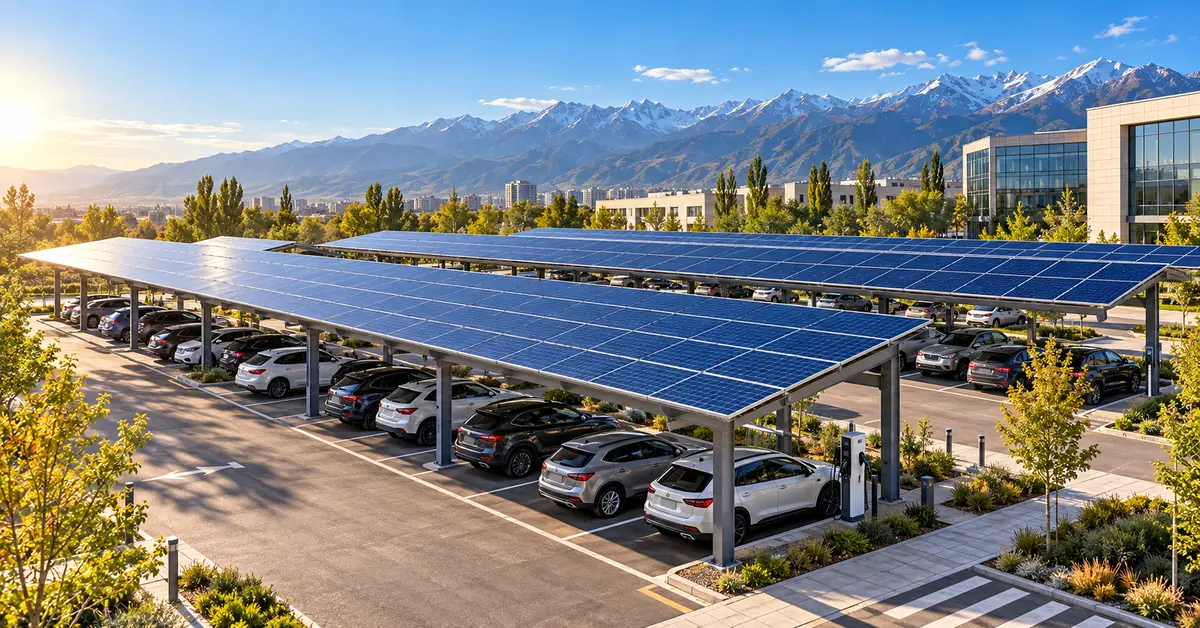
Solar canopy over parked cars with an EV charging point
Concept visual
Solution 03

Solar carport

Solar generation and covered parking in one engineered structure.

  • Dual use of parking space
  • EV charging readiness
  • Visible ESG benefits
Explore solar carports
Solar plant design ↗Solar electricity under a PPA ↗1 MW solar cost ↗100 kW solar cost ↗
02 / INDUSTRIES

Solar for your industry

Choose your site type. Explore what shapes capacity and economics, what information to share and what an initial assessment delivers.

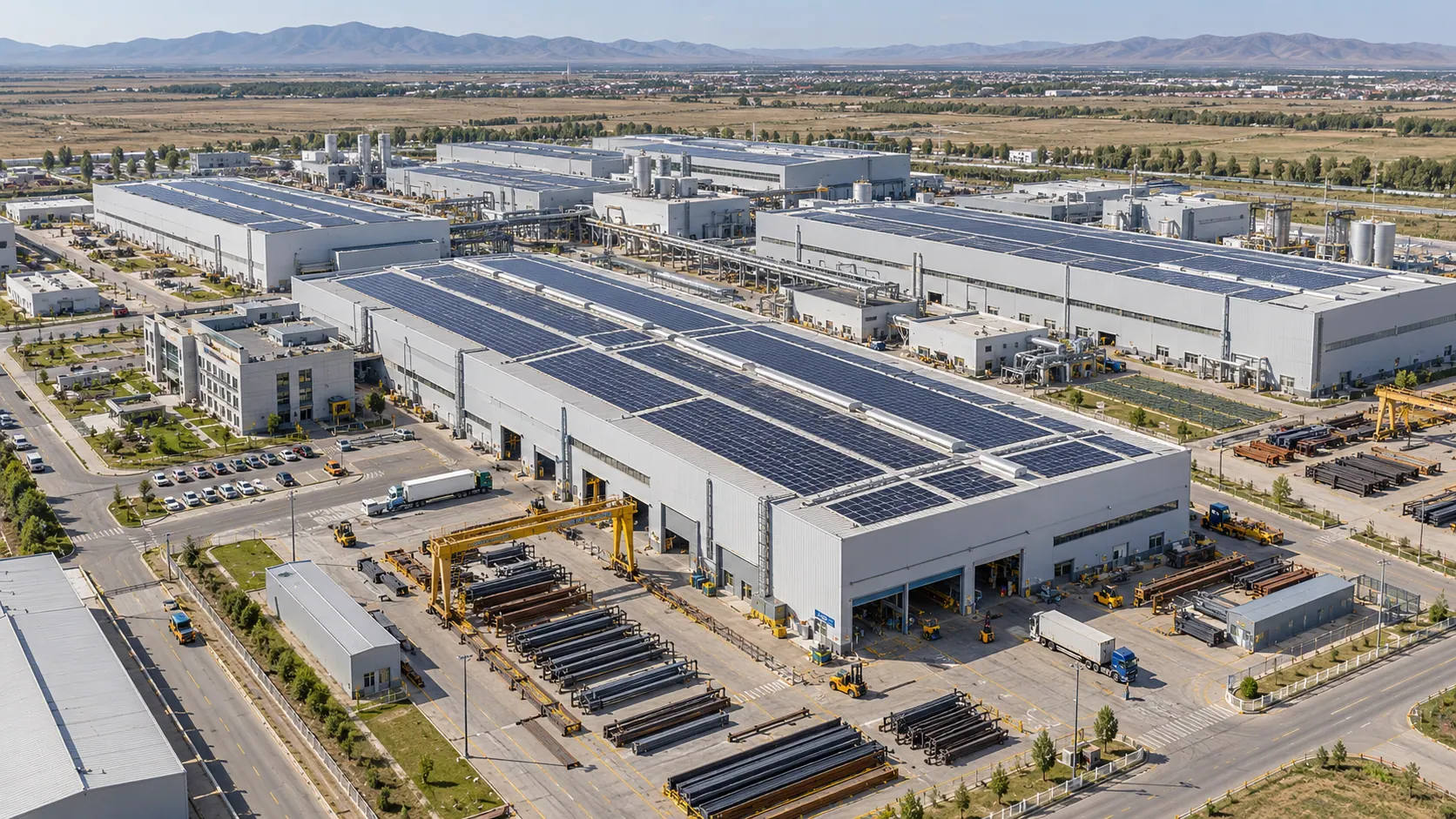
Illustration of a manufacturing complex with production halls and solar rooftops
Illustrative solutionIND

Industry

Solar for manufacturing sites: demand, placement and phased construction.

Roof and groundConstruction or PPA

Assessment outputCapacity, placement and project phasing options.

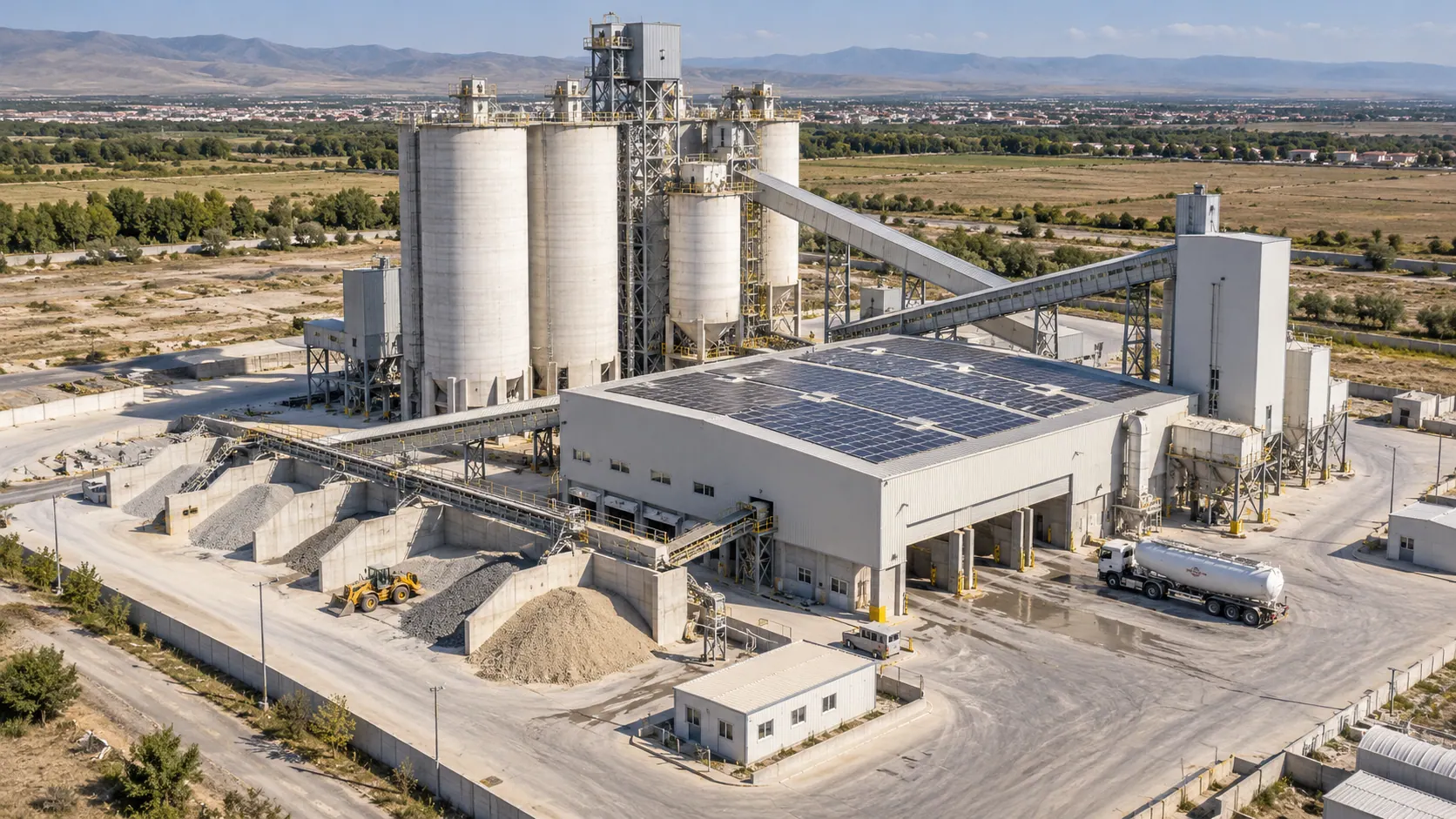
Illustration of a materials plant with cement silos, conveyors and rooftop solar
Illustrative solutionCEM

Cement and materials

Solar generation for energy-intensive production and available factory space.

Ground-mounted solarPhased construction

Assessment outputSystem scale and the next stage of connection assessment.

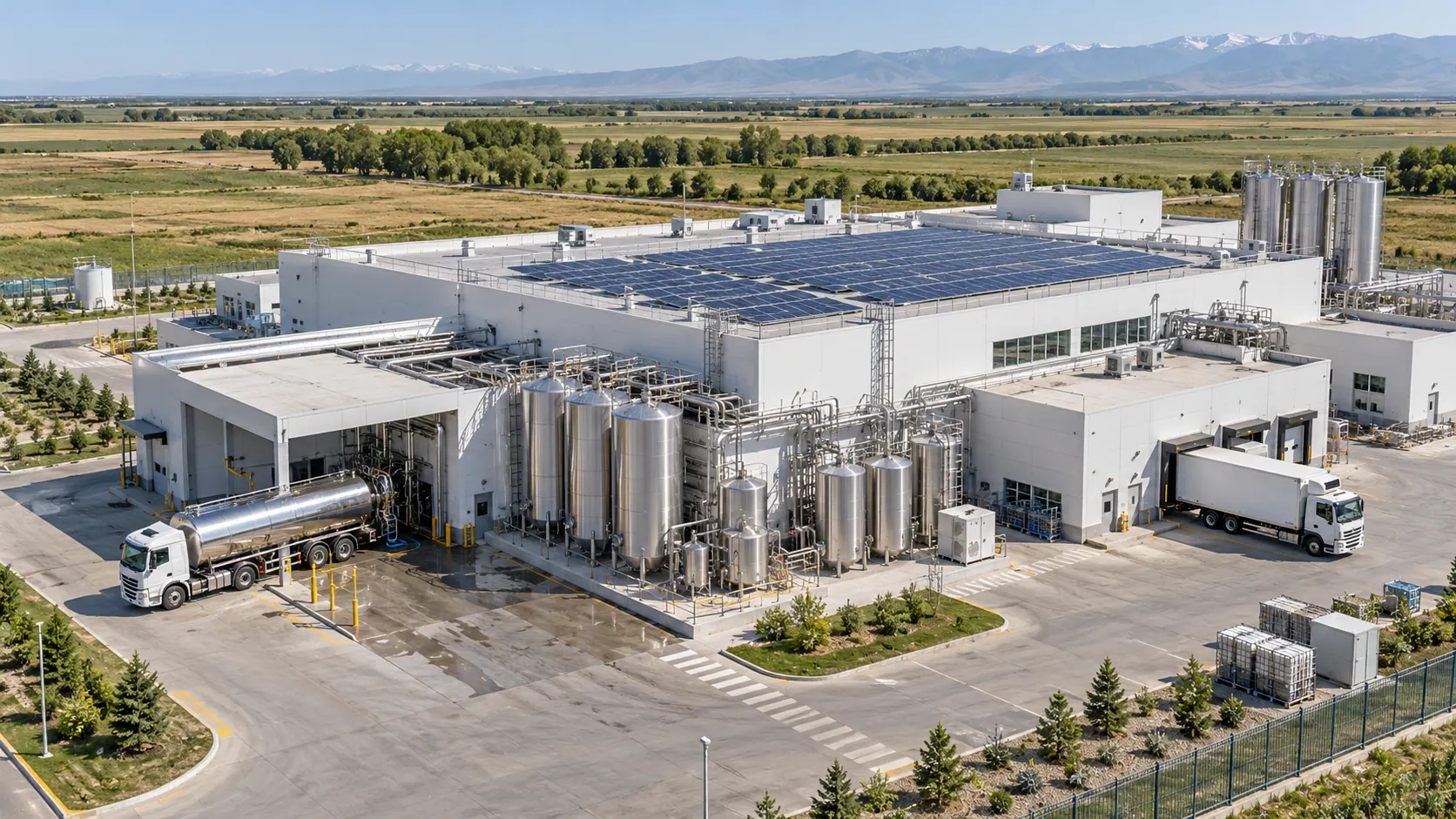
Illustration of a food processing plant with stainless tanks, a milk tanker and rooftop solar
Illustrative solutionFMCG

Food production

An assessment based on production lines, refrigeration and shift patterns.

Rooftop solarExport limiting

Assessment outputOn-site solar consumption assessed against production patterns.

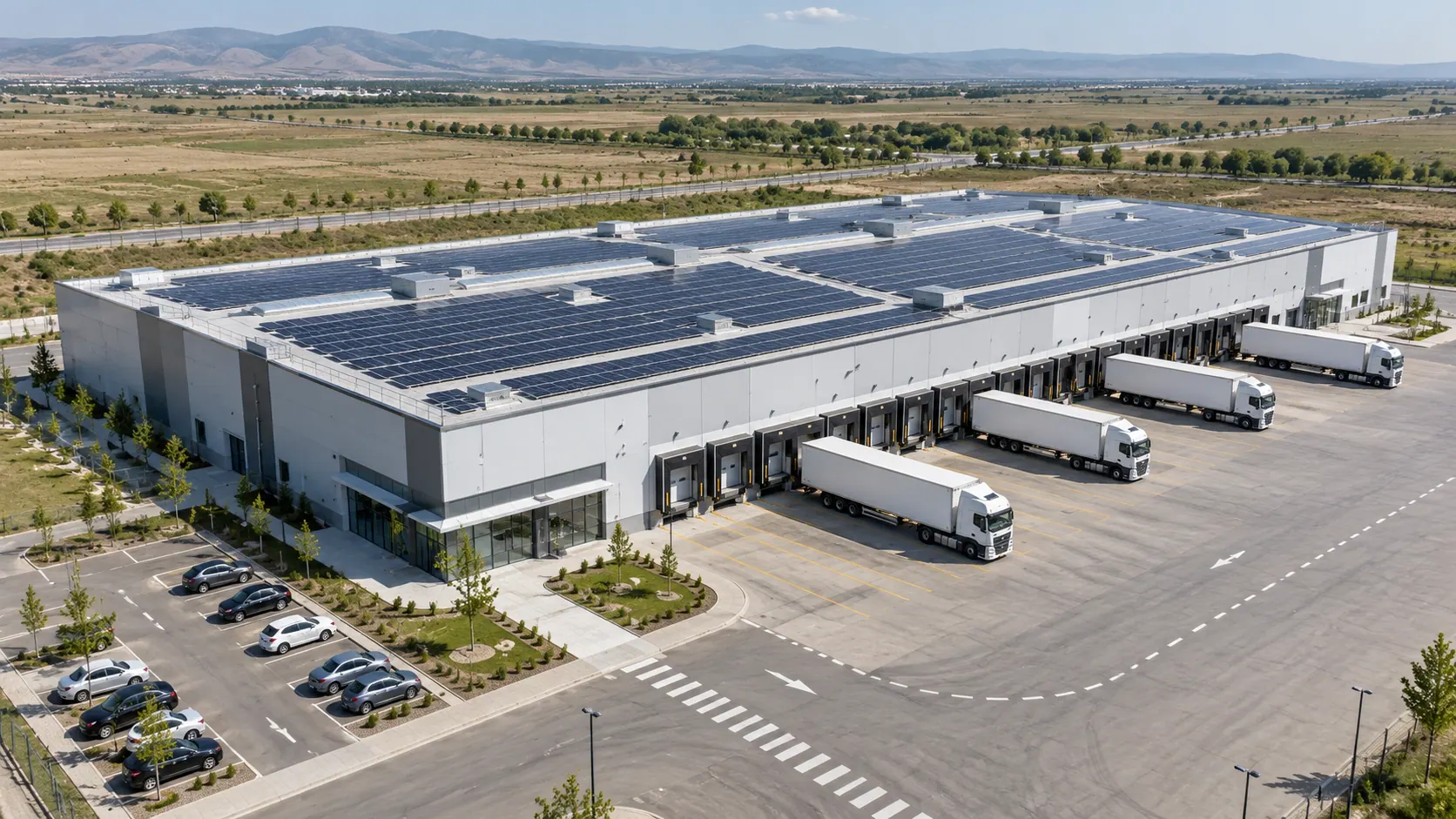
Illustration of a warehouse with rooftop solar, loading docks and trucks
Illustrative solutionLOG

Warehousing and logistics

Large roofs, loading areas and actual daytime electricity use.

Rooftop solarSolar carports

Assessment outputAn initial capacity and a list of site checks.

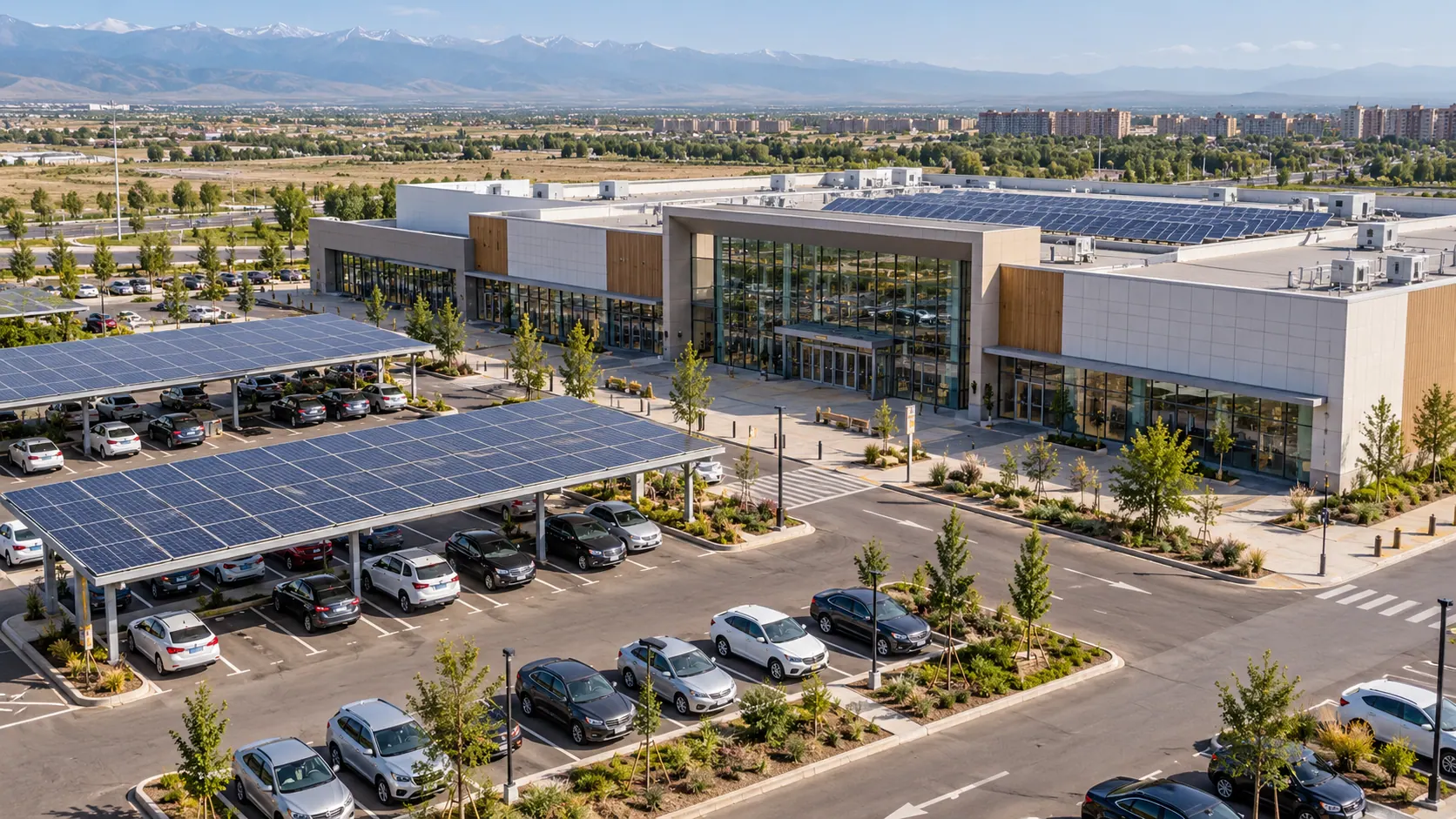
Illustration of a shopping centre with customer parking and solar canopies
Illustrative solutionRET

Commercial property

Rooftop solar and parking canopies for retail and business properties.

Rooftop solarSolar carports

Assessment outputPlacement options and an on-site consumption scenario.

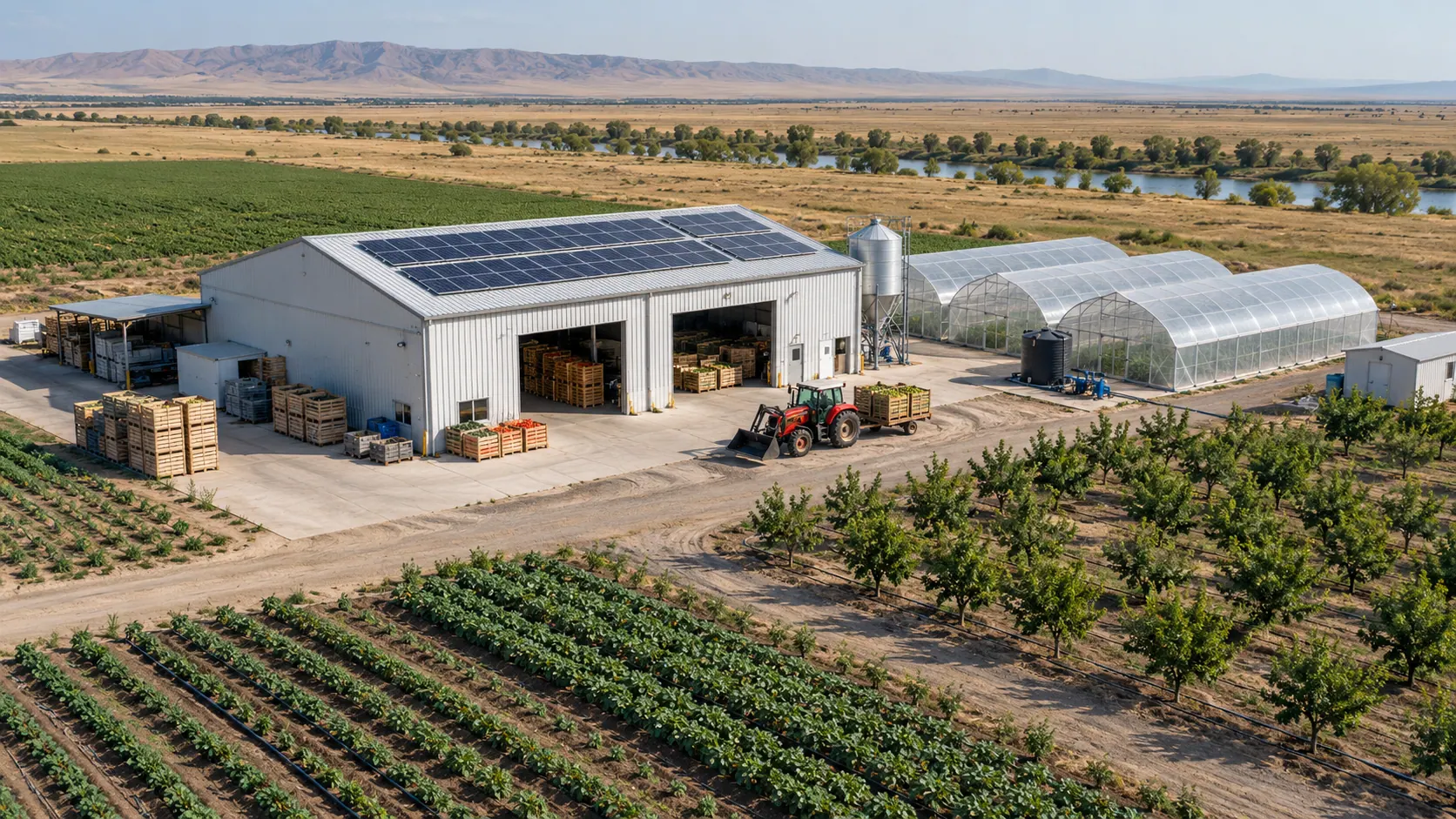
Illustration of a farm with greenhouses, a tractor, crop fields and a solar roof
Illustrative solutionAGR

Agribusiness

Solar for processing, irrigation and seasonal electricity demand.

Seasonal demandStorage if justified

Assessment outputCapacity options and a check of backup supply needs.

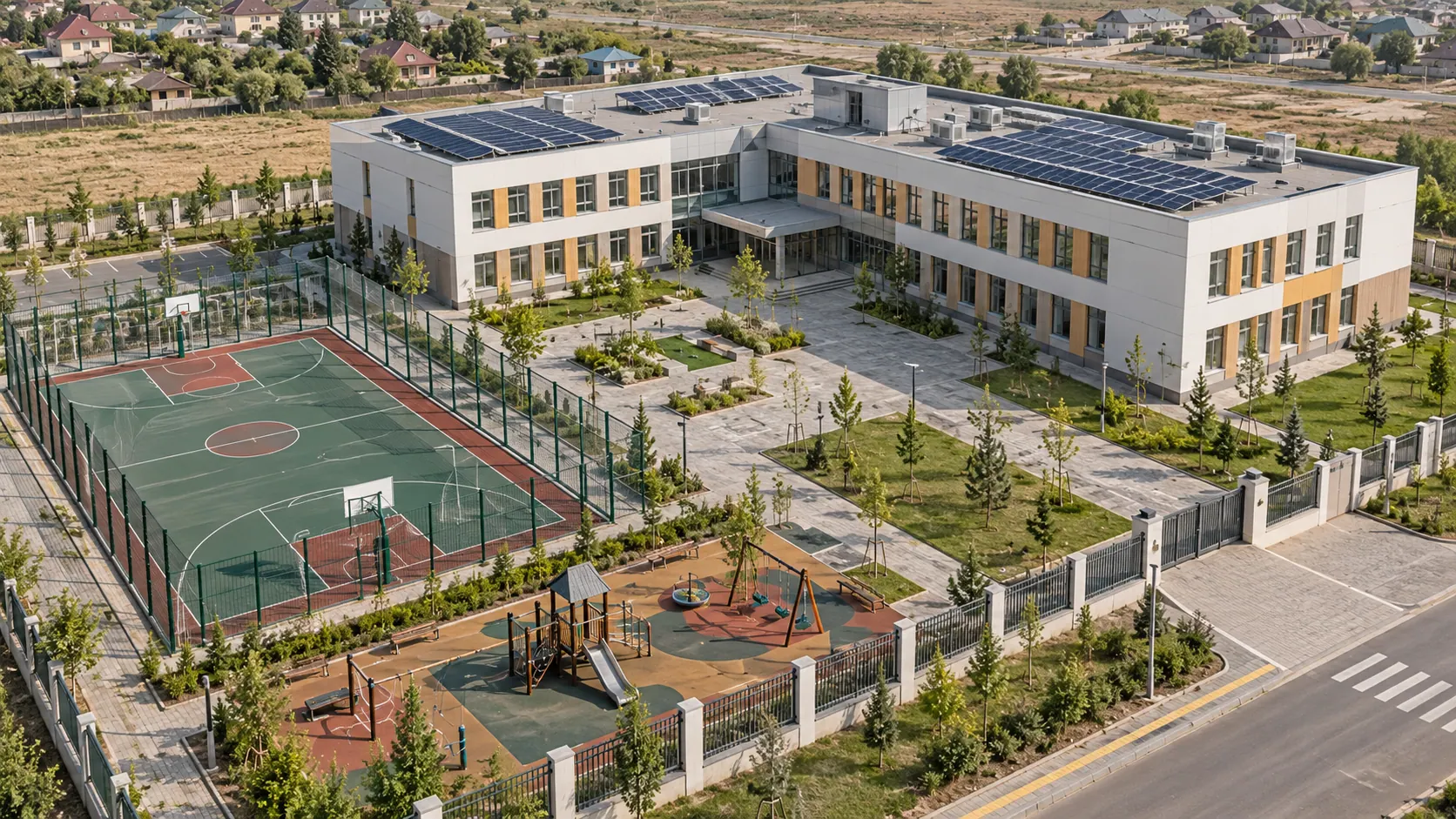
Illustration of a school with rooftop solar, a sports court and a playground
Illustrative solutionEDU

Education

Roofs and parking assessed against teaching days, holidays and summer use.

Roofs and parkingTeaching calendar

Assessment outputPilot options and demand assessment across teaching and summer periods.

03 / COOPERATION MODELS

Three ways to switch
to solar energy

Compare who funds the plant, who owns it and what you pay for. We confirm the right model after assessing your site.

Milestone payments

EPC construction

Your plant. Our engineering and construction, funded by the customer.

Who funds it
Customer
Who owns the plant
Customer
What you pay for
Design, equipment and construction
Term
Project schedule
Terms and service

You fund the project using your own capital or a loan. QuantAI Energy manages design, procurement, construction and commissioning under a turnkey EPC contract.

Ownership
customer
Milestone payments
design, equipment supply, installation and commissioning; schedule set in the contract
Service after commissioning
monitoring, maintenance and reporting under the agreed service plan
Equipment warranties
subject to manufacturers’ terms and documentation
Discuss construction
PPA up to 20 years

Solar energy PPA

An investor builds a solar plant at your site. You buy the electricity.

Who funds it
Investor
Who owns the plant
Investor
What you pay for
Solar kWh actually delivered
Term
Up to 20 years
Terms and service

An investor finances construction and owns the solar plant at your site. You buy the solar electricity actually delivered under a PPA. The term, tariff and responsibilities are agreed after a site assessment and set in the contract.

Contract term
up to 20 years
Upfront investment
the investor funds the solar plant purchase and construction
Payment
metered kWh actually delivered
Tariff
agreed rate; price escalation rules set in the contract
Maintenance and monitoring
arranged and paid for by the investor under the contract
Ownership
investor; buyout or transfer only if agreed in the contract
PPA terms and a worked example →
Calculate PPA
30% initial payment

Solar leasing

Use the plant and pay for it under an agreed lease schedule.

Who funds it
Lessor and customer
Who owns the plant
Ownership transfer under the contract
What you pay for
Initial payment and lease instalments
Term
Indicative term: 5 years
Terms and service

You use the solar plant and make lease payments. Indicative terms are based on Green Leasing from BCC Leasing, a subsidiary of Bank CenterCredit. Solar equipment eligibility, the final rate, payment schedule and ownership transfer terms are agreed individually and set in the contract.

Planned term
5 years
Initial payment
30% of the solar plant cost
Nominal annual rate
22.1–24.6%Annual effective rate: 25–28%
Application review
from 1 weekafter a complete document package is received
Arrangement fee
0.5–1% of the financing amount
Source of terms
BCC LeasingChecked
Discuss leasing
After commissioningMonitoring, maintenance and reporting under the agreed service plan.
04 / PROJECT JOURNEY

From site assessment
to solar commissioning

Every stage has a clear outcome. You know what is ready and what comes next.

  1. 012–5 days

    Consumption assessment

    OutcomeAn appropriate solar capacityStage detailsHide details

    We review three months of consumption, tariff, capacity allocated under the technical conditions and load profile to estimate an appropriate solar capacity.

  2. 023–10 days

    Site survey

    OutcomeSite and connection assessmentStage detailsHide details

    We assess topography and ground conditions for land, and structural capacity, roof condition and shading for rooftops; we identify connection points.

  3. 033–8 weeks

    Grid conditions and design

    OutcomeAgreed technical solutionStage detailsHide details

    We develop the technical solution, protection, cable routes, metering/SCADA and detailed design.

  4. 046–14 weeks

    Procurement and construction

    OutcomeInstalled solar plantStage detailsHide details

    Modules, inverters, structures, cables and protection; installation with QA/QC and HSE controls.

  5. 051–3 weeks

    Testing and commissioning

    OutcomeCommissioning and handover documentsStage detailsHide details

    Testing, relay protection settings, synchronisation, staff training and as-built documentation.

  6. 06ongoing

    Monitoring and service

    OutcomeGeneration monitoring and maintenanceStage detailsHide details

    24/7 generation monitoring, scheduled inspections, thermal imaging, cleaning and alarm response.

Durations are indicative. The schedule depends on site conditions, the scope of work and approvals.

05 / SCADA

Always
connected

SCADA collects data from inverters, meters, weather stations and protection systems. Customers see generation and equipment status while the service team receives alarms and identifies faults.

GenerationAlarmsWeather dataReports
Demonstration monitoring exampleDEMO
CURRENT OUTPUT382.6 kW+8.4% vs plan
Today2.31 MWh
Availability99.4%
CO₂ avoided1.7 t

Illustrative data showing monitoring capabilities.

06 / PROJECTS IN DEVELOPMENT

From the customer’s need
to a technical solution

Industrial and commercial projects at the preliminary assessment and proposal stage. Capacity and configuration are refined using demand, site conditions and connection requirements.

Retail and logisticsPreliminary proposal

Rooftop solar pilot

≈600 kW
Need
Assess a rooftop pilot for a site with daytime demand and potential to scale.
Work completed
A preliminary proposal has been prepared for an approximately 600 kW pilot.
Customer value
A pilot enables the solution to be assessed before scaling across other sites.
Next step
Verify load and roof condition, then compare generation with the demand profile.
Cement productionPreliminary assessment

Solar for an energy-intensive facility

≈4.5 MW
Need
Assess ground-mounted solar for industrial electricity demand.
Work completed
Development has reached the preliminary assessment of an approximately 4.5 MW scenario.
Customer value
The initial scale defines the next assessment of the site, connection and project economics.
Next step
Clarify input data, layout and grid connection requirements.
Site-specific assessmentAn initial assessment needs electricity consumption, tariff, site and connection data. These define the preliminary solution and the scope of further development.
07 / QUICK ESTIMATE

Calculate your
future solar power plant

Enter capacity, tariff and demand to see the approximate size of your plant and its potential financial impact.

Please noteFinal design depends on load profile, technical conditions, shading and site conditions.
kW
KZT/kWh
kWh
50 kW10 MW
Installation type
630 W modules794pcs
Approximate area8 000m²
Annual generation675–750MWh
Potential share of annual demand24%
Upper estimate of annual savings28,6–31,7million KZT
Implementation time4–7months

Savings are capped by the site's annual consumption. This is an upper estimate: hourly alignment, grid constraints and maintenance costs require site data. This is not a commercial offer.

Share project details ↓
07A / ILLUSTRATIVE ASSESSMENT

What an assessment
can show for your site

An illustrative rooftop solar project for a business in Kazakhstan. The assumptions explain the method; they are not a forecast or commercial offer.

Assumptions

Plant capacity
500 kWp
Site demand
250,000 kWh/month
Example tariff
42.3 KZT/kWh
Specific annual yield
1,350 kWh/kWp
Share of generation consumed on site
80 %

For a real project, we recalculate yield using coordinates, orientation, shading and losses, and self-consumption using the hourly load profile. About PVGIS solar data ↗

Results under these assumptions

Expected annual generation675,000 kWh500 × 1 350
Consumed on site540,000 kWh675 000 × 80 %
Share of annual demand covered18 %540 000 ÷ (250 000 × 12)
Lower purchased electricity costs≈ 22.8 million KZT/year540,000 × 42.3 KZT/kWh

The example excludes CAPEX, maintenance, tax, tariff changes and any value of electricity not consumed on site. Payback follows a project cost estimate. Actual generation and savings may differ.

Assess my site ↗
07B / ILLUSTRATIVE BUDGET

100 kW solar power plant: an illustrative cost breakdown

See how a rooftop solar budget for on-site consumption can be structured. Every amount below is an assumption for this example, rather than a QuantAI Energy price list or commercial offer.

Illustrative 100 kWp rooftop solar budget · no batteries
Cost itemmillion KZT, excluding VAT
Site assessment and engineering2.0
Solar modules and grid-tied inverters16.0
Mounting, cabling, switchgear and protection6.0
Installation, testing and commissioning4.0
Budget contingency2.0
Illustrative total30.0

30 million KZT ÷ 100 kW = 300,000 KZT/kW, excluding VAT. This is an assumed input for the example; an actual price requires a site-specific estimate.

Assumptions for this example

  • Grid-tied rooftop solar: 100 kWp of modules and 100 kW of inverter capacity; no BESS or backup power.
  • A site in Almaty or Almaty Region, with an existing roof suitable for installation without reinforcement.
  • Connection to an existing 0.4 kV switchboard, with a cable route up to 50 m. Feasibility remains subject to assessment and grid requirements.
  • The budget allows for equipment, local delivery, installation, basic monitoring, testing and handover documents.

Assessed separately

VAT, roof reinforcement or repairs, a new transformer substation or external grid works, BESS, approvals and expert review fees where required, financing and post-commissioning service. This example does not calculate savings or payback.

The final scope, price, taxes, schedule and warranties are set out in a commercial offer after checking the site, connection point and current supplier quotations. To start, share the site address, electricity bills and a roof plan.

Request a 100 kW solar estimate
08 / QUALITY ASSURANCE
IECequipment and testing to international standards
HSEsafety plan before site work begins
QA/QCincoming inspection, checklists and as-built records
PRperformance-ratio tracking after commissioning
09 / FAQ

Answers to common questions

What is the solar plant's payback period?+

For some projects in Kazakhstan without BESS, around four years is an indicative payback. Actual results depend on construction cost, tariff, load profile, on-site consumption and financing. Energy screening provides base and conservative cases, projected cash flow and simple payback.

What warranties does the customer receive?+

The package includes manufacturers' warranties for modules, inverters and other equipment, a warranty for EPC works, testing records and as-built documents. Specific terms depend on the chosen equipment and the contract.

What does after-sales service include?+

SCADA monitoring, alarm handling, remote diagnostics, scheduled inspections, thermal imaging, generation monitoring and equipment maintenance. Inspection intervals and response times are set in the service SLA.

How much can electricity costs fall?+

Savings come from replacing purchased electricity with solar energy consumed on site. We assess this using 12 months of demand, hourly load, tariff and expected generation, reporting kWh, annual KZT savings and the share of demand covered.

How much does a 100 kW solar power plant cost?+

Cost depends on placement, structures, connection requirements and scope. For an initial assessment, share the site address, electricity consumption and tariff. The proposal will distinguish equipment, design, installation and additional works.

How do we choose between 100, 200 and 500 kW?+

Capacity follows the load profile, available space and connection conditions. We compare alternatives and the generation the business can use on site. The site's allocated grid capacity alone does not determine the right solar capacity.

10 / ABOUT US

Engineering. Data.
Accountability.

QuantAI Energy develops solar projects for commercial and industrial sites in Kazakhstan and Central Asia. We assemble project teams around each site's capacity, conditions and customer requirements.

Delivery model

We bring together specialists and coordinate the customer, designers, suppliers and installation team.

01

Development

Site data, economics, EPC or PPA model and partner coordination.

02

Engineering

Engineering design, structures, electrical systems, grid conditions and connection.

03

Construction

Procurement, HSE, QA/QC, installation, testing and as-built documentation.

04

Operations

SCADA, monitoring, scheduled maintenance, SLA and performance-ratio tracking.

NEXT STEP

Share a brief
about your site

Leave your contact details and company or site name. Choose a cooperation model or “Please advise”. Add technical details if you have them.

Add technical details (optional)
Electricity consumption for each of the last three months, kWh
Enter monthly consumption if available. No bills are required.